New Mexico
As of July 7, 2022, New Mexico had reported 5,643 COVID-19 cases per 100,000 people over the previous seven days, which ranks New Mexico eighth-highest in the nation. Since the start of the pandemic, New Mexico has reported 568,434 total cases to the Centers for Disease Control and Prevention (CDC). That’s 27,109 cases per 100,000 people, which ranks New Mexico 26th-highest in the nation for total cases.
As of July 7, 2022, New Mexico had reported 4,098,196 vaccine doses administered to the CDC. That’s 195,447 doses per 100,000 people, which ranks New Mexico 15th-highest in the nation.
At the start of the pandemic, Governor Michelle Lujan Grisham issued a stay-at-home order. It began on March 24, 2020 and lasted 53 days, making it the eighth-longest shutdown in the nation. Throughout the summer and fall, Governor Grisham strengthened and relaxed restrictions based on the number of cases in the state. In December, the state adopted a new system that imposed restrictions on each county based on its risk level. On July 1, the governor lifted restrictions on mass gatherings and business occupancy limits. The state is now fully “reopened.” This paragraph was last updated on October 1, 2021. For the more information, please see the New York Times.

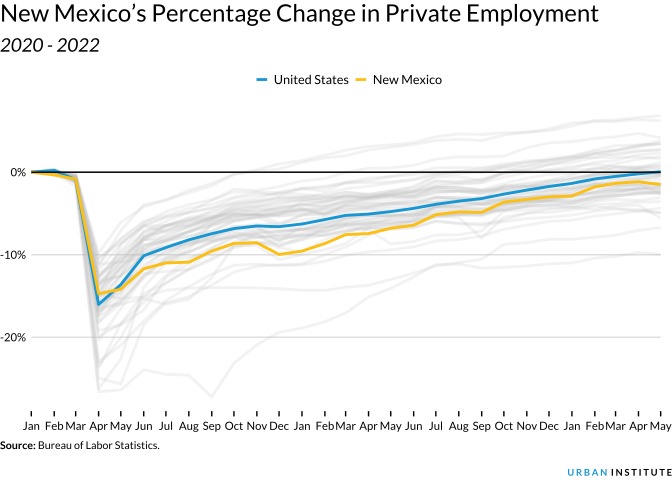
New Mexico’s private employment is down 19,500 jobs, or 2.9 percent, since January 2020. According to the latest Bureau of Labor Statistics data release, the mining and logging industry experienced the greatest percentage decline in employment across the state, reporting 21.3 percent (5,300) fewer jobs since January. The largest total number of jobs lost was also in the mining and logging sector.
The pandemic’s economic downturn had notably disparate effects on different workers, industries, and racial groups. For example, the accommodation and food services industry was hit particularly hard and unemployment rates were typically higher for Black and Latino Americans. Learn more about the variations in New Mexico’s finances, economics, demographics, and politics on it’s state fiscal brief page.
New Mexico’s Budget Actions
Governor Lujan Grisham released her FY 2023 budget proposal and gave her state of the state address in January 2022. In February 2022, New Mexico enacted a series of tax cuts, including lowering the state’s sales tax rate from 5.125 percent to 4.875 percent, a one-time tax rebates to tax filers ($250 for individuals and $500 for married couples), and an annual rebate of $175 per child on the filer’s return.
New Mexico enacted its FY 2022 budget in April 2021. According to the governor, the enacted budget included $7.5 billion in general fund spending, a 5 percent increase over the previously enacted budget. As part of the budget, New Mexico expanded its earned income tax credit from 17 percent of the federal credit to 20 percent in tax year 2021 and 25 percent in tax year 2023 and expanded access to another state tax credit that benefits low-income households (the maximum eligible income was raised from $22,000 to $36,000).
Under the American Rescue Plan, New Mexico will receive $1.8 billion in direct state fiscal aid and $579 million in local government aid from the federal government. As of January 2022, New Mexico had spent part of its ARP funds on refilling its unemployment insurance trust fund, economic development, and public health programs.
According to NASBO, New Mexico’s recent expenditure totals (general fund spending/total spending, including federal transfers) were:
FY 2021: $7.3 billion/$25.3 billion
FY 2020: $6.9 billion/$22.3 billion
FY 2019: $6.0 billion/$19.5 billion
New Mexico’s total state tax revenue collections from the second quarter of calendar year 2020 to the first quarter of 2021 (combined) were 0.6 percent higher than over the previous (combined) four quarters. State tax revenue changes varied significantly across the states during this period, ranging from a 39.3 percent decline in Alaska to a 12.3 percent increase in Idaho. Overall, 18 states of 50 states reported lower revenue collections over that period in than the prior four quarters (download the state tax revenue data here).
New Mexico has not yet reported data for fiscal year 2020. (New Mexico’s fiscal year, like most state fiscal years, runs from July to June.) Most states experienced revenue declines in fiscal year 2020. A state’s tax revenue might be up, down, or steady depending on the prevalence of the novel coronavirus, the state’s major economic sectors, and its revenue structure, among other things. Additionally, while all states moved tax deadlines during the pandemic, different states reported this ‘shifted’ revenue in different quarters and fiscal years. This might also affect a state’s reported revenue growth.
Learn how to access and download state revenue collections data and revenue forecasting data for every state at the State and Local Finance Initiative’s data subscription page.
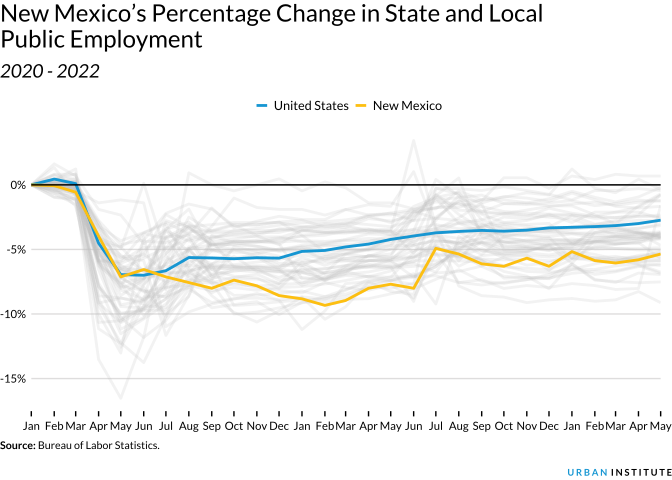
From January 2020 to May 2022, New Mexico lost 8,200 state and local public jobs, a 5.2 percent decline.